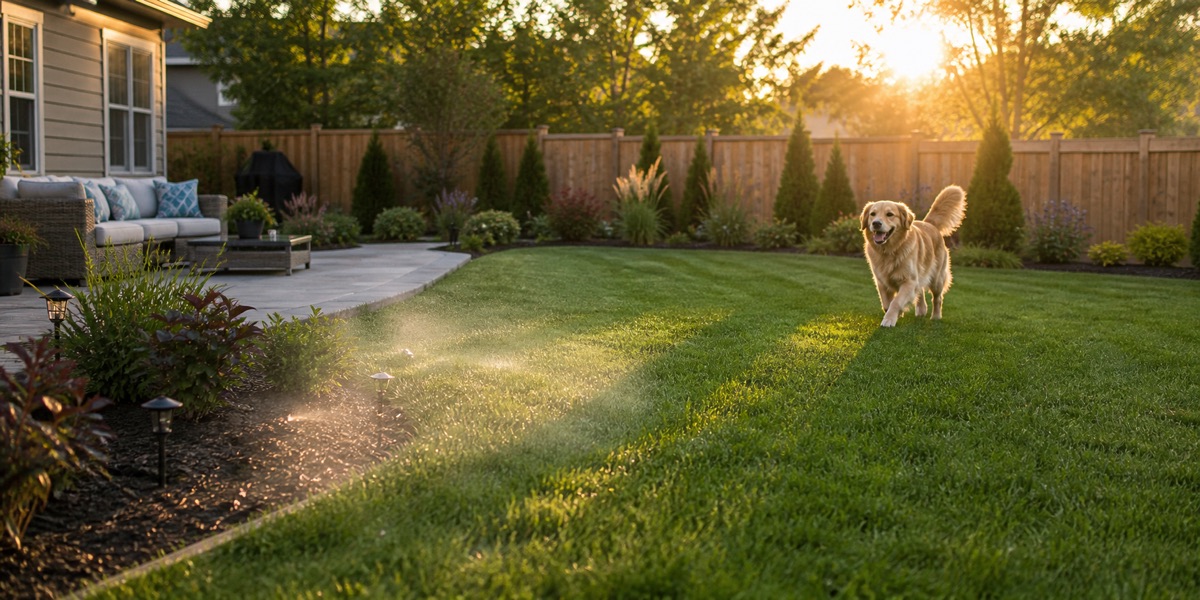
Dog waste odor gets worse when waste sits through heat, rain, or humid Midwest weather. Grass, soil, mulch, and gravel can all hold odor because waste breaks down into areas that are not easy to remove with a single scoop. A yard may look clean from the patio, but the smell tells you something is still hanging around.
Cleanup comes first
Deodorizing works best after the yard is physically cleaned. Spraying over piles or skipped areas is just a cover-up. The first step is always dog waste removal: walk the yard, clear high-use zones, check along fence lines, and pay attention to places where dogs like to circle before they go.
The CDC notes that dog poop can carry germs and should be picked up even in your own yard, especially in areas where children may play. That advice is not just about appearance. It is about making the outdoor space easier and safer to use.
Why deodorizing matters
Once the waste is gone, deodorizing helps target the odor left behind in the surface area. For dog owners, this is the difference between "the yard was scooped" and "the yard feels fresh enough to enjoy." If you have a patio, small yard, townhome yard, or a dog that uses the same strip of grass every day, odor control can matter as much as the pickup itself.
When odor gets worse
- After rain, when moisture reactivates smells in soil or mulch.
- During hot weeks, when waste breaks down faster.
- In small fenced yards where dogs use the same path repeatedly.
- When one-time cleanup is delayed for several weeks.
Scooper Heroes includes deodorizing with recurring service and one-time cleanups because customers do not just want fewer piles. They want a yard that smells cleaner when they open the back door. For homes in Northwest Indiana and the Chicago South Suburbs, our pet-safe lawn treatments help bridge the gap between basic pickup and a yard that feels reset.